

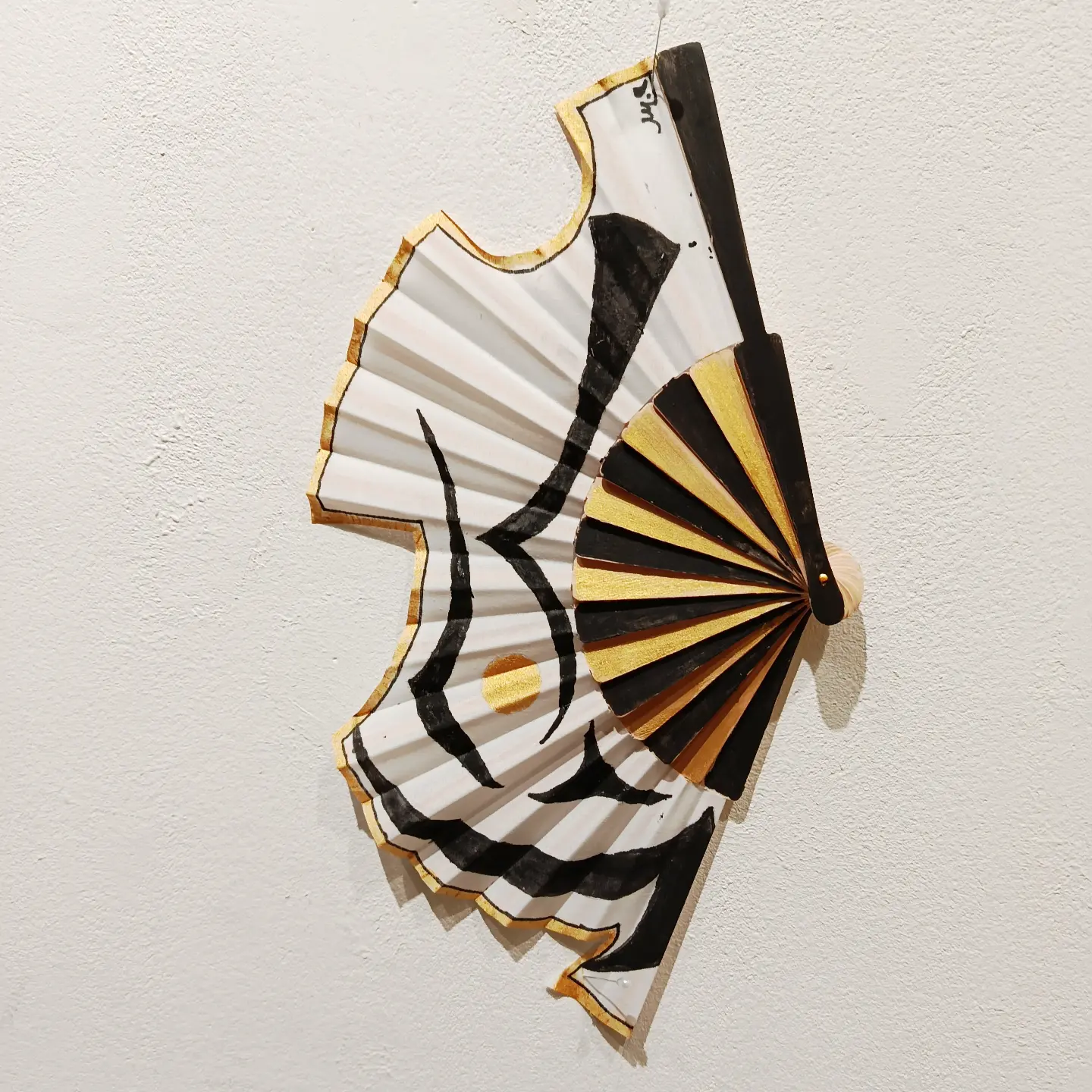
Neus Colet is a contemporary artist whose creative practice moves between printmaking and sculpture, two disciplines that she uses independently as well as in combination. Her work is distinguished by an imaginative reinterpretation of familiar objects, transforming elements of everyday life into playful, ironic, and evocative artistic forms.
Pulleys, gears, wheels, cars, and other mechanical objects frequently appear throughout her work. While these elements may initially seem ordinary or functional, Colet gives them new meaning by removing them from their conventional contexts and placing them within imaginative compositions.
Through this process, everyday objects become something more. They can suggest memories, movement, humor, nostalgia, or questions about the relationship between people and the material world.
Movement and dynamism are particularly important qualities within Colet’s artistic language. Her recurring use of wheels, gears, and mechanical forms introduces a sense of energy and motion, even when the artwork itself is physically static.
Her sculptures and prints invite viewers to look at familiar objects from a different perspective, discovering unexpected emotional and symbolic possibilities within them.
The Creative Dialogue Between Printmaking and Sculpture
Neus Colet’s artistic identity is built around two primary disciplines: printmaking and sculpture.
Rather than treating these as completely separate practices, she allows them to interact and influence one another. At times, she works exclusively within one medium, while in other works she combines techniques to create a more complex visual and conceptual experience.
This openness to working across disciplines allows Colet to explore the strengths of each medium.
Printmaking offers possibilities related to surface, texture, repetition, and graphic expression. Sculpture, meanwhile, introduces physical volume, space, and three-dimensional presence.
When these approaches come together, they create a dialogue between image and object. The combination can enrich the narrative qualities of her sculptural work, allowing printed elements to become part of a larger physical composition.
This interdisciplinary approach reflects an artist who is not restricted by traditional boundaries between artistic techniques.
Finding Inspiration in Everyday Objects
One of the defining features of Colet’s work is her fascination with ordinary objects.
Objects such as pulleys, gears, cars, and wheels are normally associated with practical functions. They belong to the world of machinery, transportation, work, and industry.
In Colet’s hands, however, these objects become artistic vocabulary.
By reinterpreting them, she changes their role and encourages viewers to see them differently. A wheel can become a symbol of movement or the passage of time. A gear can suggest connection and interdependence. A pulley can evoke effort, labor, or mechanical transformation.
The objects remain recognizable, but their meanings become open-ended.
This transformation gives her work a playful quality while also allowing it to carry deeper associations.
Playfulness, Irony, and Evocation
Colet’s work is characterized by a combination of playfulness and irony.
Her use of familiar objects often creates an immediate sense of recognition. Viewers may encounter something they have seen many times before, only to find it presented in an unexpected context.
This creates a subtle sense of humor and invites the viewer to reconsider the relationship between the object and its new artistic environment.
At the same time, her works are evocative. They can trigger memories and associations without providing a single, predetermined interpretation.
The viewer is encouraged to participate in the process of discovering meaning.
This balance between humor and suggestion is one of the strengths of Colet’s artistic approach. Her work can be engaging and accessible at first glance while revealing more complex ideas through closer observation.
Movement as a Recurring Theme
Movement is a powerful visual and conceptual element throughout Neus Colet’s work.
The recurring presence of wheels, gears, pulleys, and cars naturally introduces the idea of motion. These objects are connected to mechanical systems designed to move, transport, rotate, or transform energy.
When placed within a sculptural context, they retain this association with movement, even when they are no longer functioning machines.
The result is a sense of potential energy. The viewer may feel that something could begin moving at any moment.
This quality gives Colet’s work a dynamic character. Her sculptures are not simply static objects occupying space; they suggest actions, processes, and stories that extend beyond the physical boundaries of the artwork.
The Transformation of Iron
Iron is one of the most important materials in Colet’s sculptural practice.
As a material, iron is traditionally associated with strength, hardness, industrial production, and coldness. It can appear heavy and resistant, qualities that might initially seem distant from the intimate and playful character of her artistic vision.
Colet challenges these assumptions through her mastery of the material.
Under her artistic treatment, iron becomes capable of expressing warmth and intimacy. Through the manipulation of its surface, texture, and form, she transforms a hard industrial material into something that can feel personal and emotionally engaging.
This transformation is central to her practice.
The contrast between the inherent qualities of iron and the emotional character of her sculptures creates an interesting tension. The material may be physically hard, yet the artwork can communicate softness, humor, nostalgia, or warmth.
Texture as an Essential Element
Texture plays a significant role in Colet’s sculptural work.
Her treatment of iron allows her to achieve a variety of surfaces and visual effects. These textures contribute to the character of each piece, encouraging viewers to pay attention not only to the overall form but also to the physical qualities of the material.
Texture can emphasize the history of an object, suggest age, or create contrasts between different elements within a composition.
In this way, the surface becomes part of the narrative.
The viewer is encouraged to imagine the physical history of the material while simultaneously considering the new meaning it has acquired through the artist’s intervention.
Combining Iron and Printmaking
One of the most distinctive aspects of Neus Colet’s practice is her ability to combine sculpture and printmaking.
In some works, printed elements become part of sculptural compositions, adding another layer of visual information and narrative possibility.
This fusion of two different techniques creates a richer artistic language. The physicality of iron is complemented by the graphic qualities of printmaking, creating a dialogue between three-dimensional form and two-dimensional imagery.
The combination also reflects Colet’s broader approach to artistic experimentation. She does not view techniques as isolated categories but as tools that can be brought together to achieve a particular creative vision.
An Established Exhibition Career
Neus Colet’s artistic career has developed through extensive exhibition activity in Spain and across Europe.
Her work has been presented in numerous national and international exhibitions, including exhibitions in countries such as Italy, France, Austria, the Netherlands, and Germany.
This international presence reflects the broad appeal of her artistic language.
Although her work is rooted in familiar objects and materials, the themes she explores movement, transformation, memory, humor, and the relationship between people and objects can be understood across cultural boundaries.
Her participation in exhibitions throughout Europe has contributed to the recognition of her practice and established her position within the contemporary art scene.
Giving New Life to the Familiar
At the heart of Neus Colet’s artistic practice is a simple yet powerful idea: familiar objects can become something entirely new when seen from another perspective.
Through printmaking and sculpture, she transforms everyday mechanical forms into imaginative visual stories.
Her pulleys, gears, wheels, and cars are no longer simply functional objects. They become symbols, memories, characters, and sources of movement.
Her use of iron further strengthens this transformation. A material known for its hardness and industrial character is reshaped into sculptures that possess warmth, intimacy, and emotional resonance.
By combining technical mastery with playfulness and irony, Colet creates works that invite viewers to look, smile, remember, and interpret.
Her established exhibition history across Spain and Europe demonstrates the continuing relevance of her artistic language. Through her distinctive approach to sculpture and printmaking, Neus Colet reminds us that even the most ordinary objects can hold extraordinary possibilities.
When removed from their expected roles and reimagined through artistic vision, everyday things can become poetic, dynamic, and deeply evocative, offering new ways to understand the world around us.
