

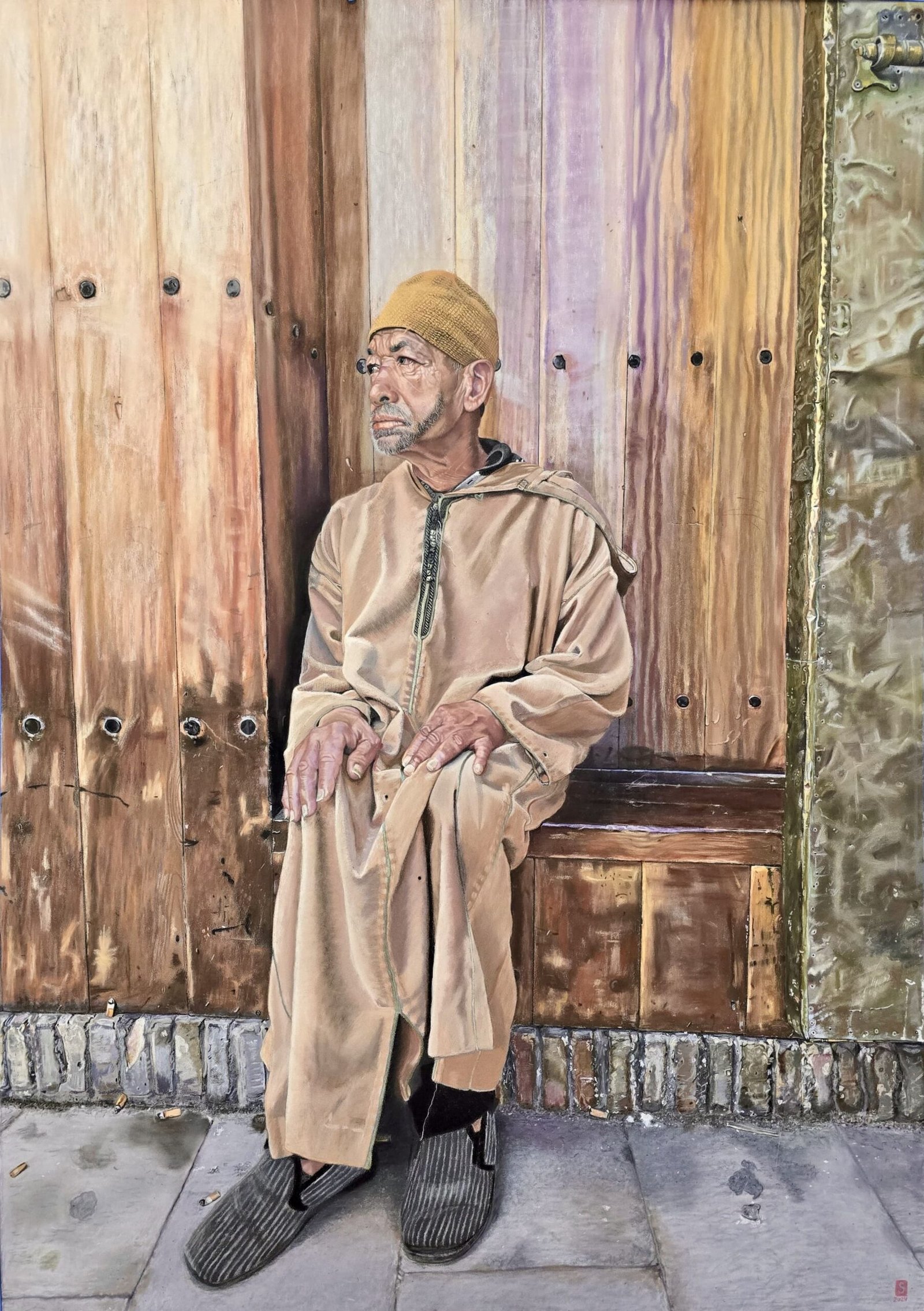
A photograph can record what someone looked like at a particular instant. It cannot, on its own, explain who that person was. This gap between visual record and human depth sits at the center of nearly every serious portrait practice, and it is the gap that Sylvianne Blum Cassereau has built her entire artistic project around closing, or at least narrowing.
The Limits of Likeness
Physical resemblance is, for Blum Cassereau, a starting point rather than a destination. Her stated intention is to move beyond mere physical representation toward something closer to the strength, sensitivity, and essence of the person portrayed. This is a considerable ambition, and one worth pausing over, because it raises a genuinely difficult question: what, exactly, can a painted surface reveal about a person that a photograph cannot?
Her answer, implicit in the work itself, seems to involve time specifically, the extended time required to build a portrait through successive layers of pastel pigment, applied by hand, over an unhurried process of observation and refinement. A photograph captures an instant; her paintings accumulate attention across many instants, layered atop one another until something resembling understanding begins to take shape.
Dignity as a Working Principle
Underlying this pursuit is a conviction about human worth that functions less as sentiment and more as method. Blum Cassereau’s work centers on the human being their worth, their dignity, their presence and this framing shapes concrete choices: which details to preserve rather than smooth away, how much individuality to allow a face to retain, how to render skin’s actual variation rather than flattening it toward generic idealization.
Dignity, treated this way, becomes less an abstract value and more a set of specific artistic decisions, repeated portrait after portrait.
The Gaze as Site of Meaning
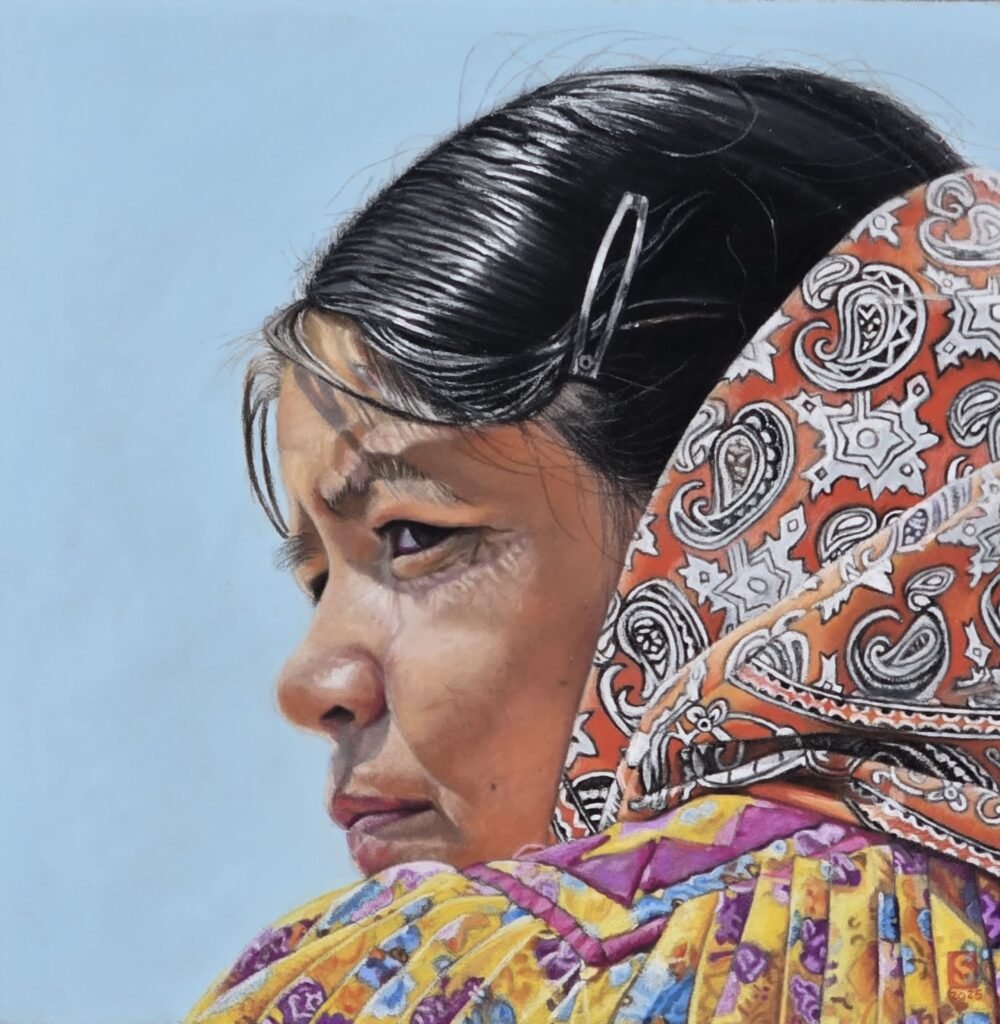
Much of the philosophical weight in Blum Cassereau’s work concentrates in the eyes, which she treats as the place where a portrait either achieves genuine presence or falls short into mere illustration. This concentration makes sense: the eyes are, culturally and psychologically, where we most readily locate the sense of another consciousness looking back at us. A portrait that gets the eyes right can feel inhabited; one that gets them wrong, however technically accomplished elsewhere, tends to feel hollow.
Her attentiveness here connects directly to her broader aim of establishing what she describes as a silent dialogue between subject and viewer, an exchange that depends entirely on the eyes carrying enough specificity and life to invite genuine engagement rather than passive observation.
Encounter as Epistemology
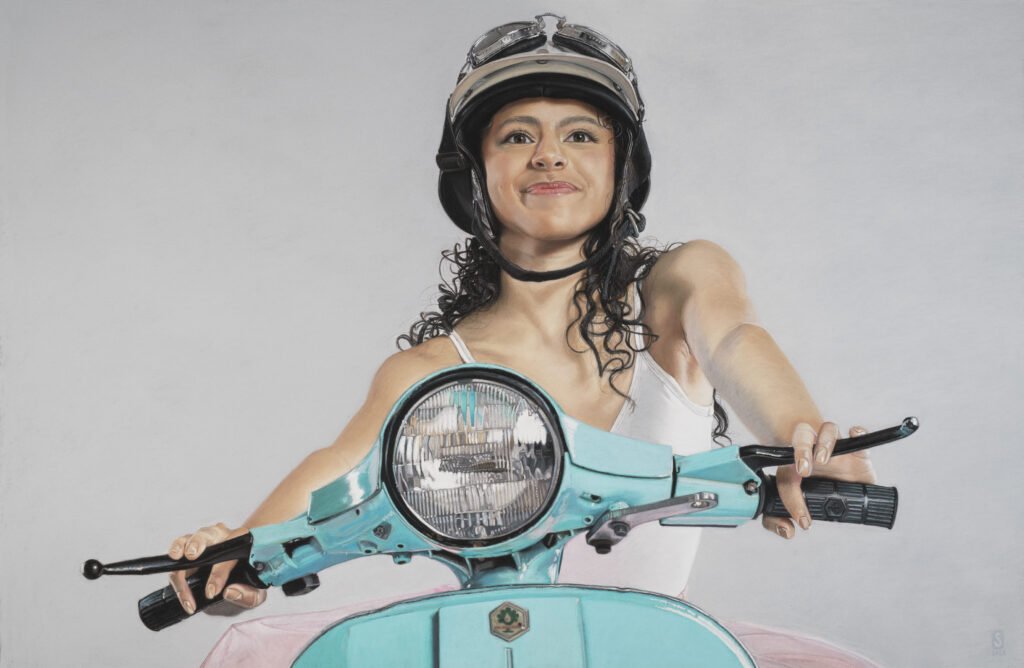
Notably, Blum Cassereau does not construct her portraits from imagination or composite reference. They emerge from actual encounters with people, cultures, and scenes she meets during her travels, recorded through her own photography before ever reaching the studio. This grounding in real encounter carries philosophical weight: it suggests that whatever understanding her portraits achieve is rooted in something like genuine relationship, however brief, rather than invention.
This raises an interesting question about what portraiture, at its most serious, actually claims to do. Is it possible to represent another person’s essence without having encountered them at all? Blum Cassereau’s practice implicitly answers no, that some form of real meeting, however momentary, is a prerequisite for the kind of depth she pursues.
Presence Across Distance
That her portraits then travel to exhibitions and art events in cities including New York, Barcelona, Madrid, Zaragoza, Venice, Rome, Cannes, Cortona, Perugia, Punta del Este, Taipei, and Hong Kong, and into international art books and magazines introduces a further layer of complexity. A portrait built from a specific, located encounter is subsequently viewed by audiences who share none of that original context. And yet something apparently still transmits, since her work continues to find recognition, including selections and distinctions in international art competitions, across radically different cultural settings.
This suggests that whatever her portraits capture operates at a level beneath cultural specificity something recognizable as human presence regardless of where the viewer stands.
An Unresolved, Necessary Question
Blum Cassereau’s practice does not claim to fully resolve the gap between physical likeness and human essence; no portrait practice honestly could. What her work offers instead is a sustained, serious attempt conducted patiently, layer by layer, from her studio in Mexico City to narrow that gap as far as observation, technique, and genuine encounter allow.
What remains, for the viewer standing before one of her portraits, is not a solved philosophical problem but an experience: the sense of having briefly met someone, of having been asked to consider what a face might reveal beyond what words could say. That experience, however momentary, is itself the argument her work makes quietly, patiently, one layered portrait at a time.
Enter her world of portraiture: Follow Sylvianne Blum Cassereau on Instagram
